



New
Why Win Rate Lies to You
I was proud that I was right more often than I was wrong — I carried that win rate around like a badge. Then a 2 a.m. account near zero taught me that “right” and “winning” are two different things, and forced a question I was ashamed of: maybe I’m just not built for this game.
2 a.m. Dark room. Only the glow of the screen on my face — green then red, red then green, blinking like a heartbeat that wasn’t mine.
My hand was on the mouse, gone cold without my noticing. Beside the keyboard sat the paper I’d been scratching tallies on all night: seven marks in the “win” column, three in the “loss.” Seven to three. Beautiful, like a dream.
Then I glanced at the corner of the screen. Account balance. Negative.
I looked at the paper. Looked at the balance. Looked at the paper again. Two numbers arguing right in front of me — one screaming that I was good, the other coldly informing me I was dying.
Right seven times out of ten. So who drained my money?
That night I wasn’t angry at the market. I was angry at myself. It wasn’t the first time — I’d carried that win rate around like a diploma while the account thinned out behind my back. The problem wasn’t that I was wrong too often. I was right often. And still burning. And the question I feared most crawled up into my head: maybe I’m just not built for this game?
You’re Not Stupid — You’re Just Counting the Wrong Thing
I know the question gnawing at you. It isn’t “where did I go wrong” — it’s something more bitter: maybe I’m just not built for this. No. You’re not lacking the talent. You’re just kneeling before the wrong number.
Let me say plainly the mechanism that once drained my account dry. Win rate answers exactly one question: out of ten trades, how many times were you right. It counts the number of TIMES, not the SIZE. You win, it logs a plus — ten dollars or one dollar, still one plus. You lose, it logs a minus — one dollar or thirty, still one minus.
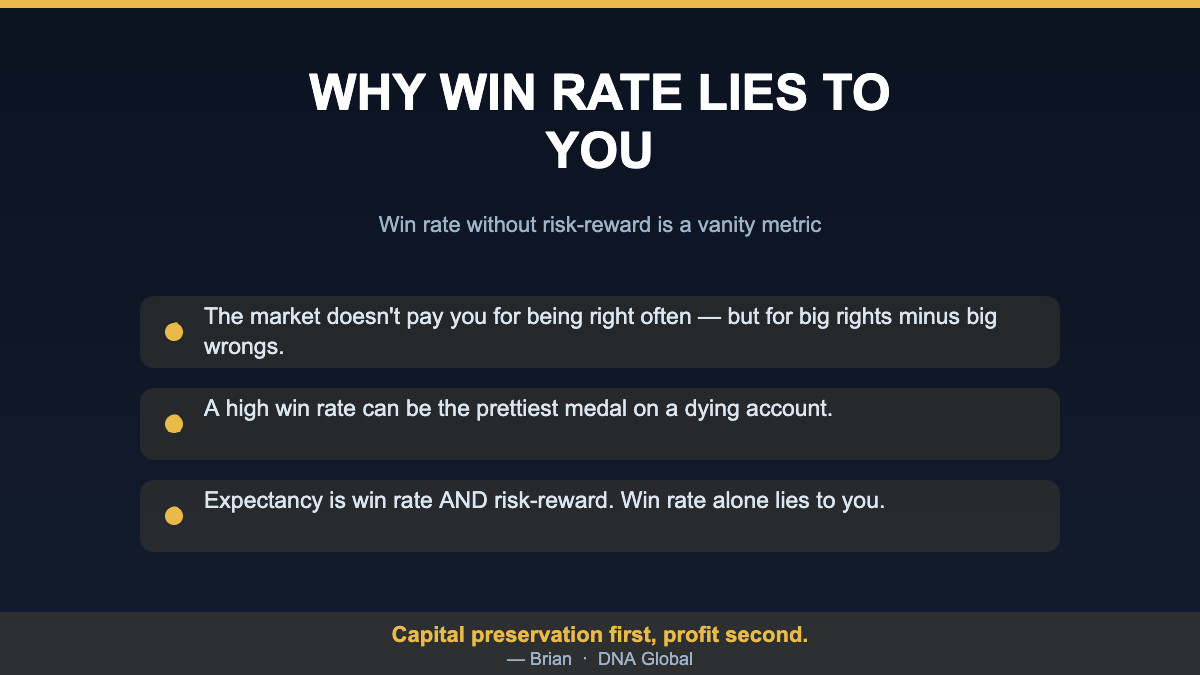
See where it kills you? The number you clutch to your chest every night is silent about the one thing that decides whether you live or die: money in, money out, how much. A high win rate can be the prettiest medal hung around the neck of a dying account.
Think like someone holding a camera. A frame can be perfectly sharp, perfectly lit, correct in every rule — and still be a ruined photograph, because it keeps nothing that matters. Your win rate is “technically correct” the same way: pretty enough to hang, useless to live on.
The Night I Tore Up the Win-Loss Sheet
To understand that, I went back to that exact 2 a.m. and did the one thing I’d been avoiding. I reopened my trade journal and drew a new column — this time not marking win or loss, but the real number: how much each trade made or lost, against what I’d risked to get in.
Seven winning trades, and it felt good to look at. But each winner was tiny — I’d closed early, grabbing the joy before it could run off. Three losing trades, mountainous — I’d held, dragged my stop, lulled myself with “it’ll turn around.” (The numbers here only illustrate what I saw that night.) Seven little hills. Three deep pits. Add them up — negative.
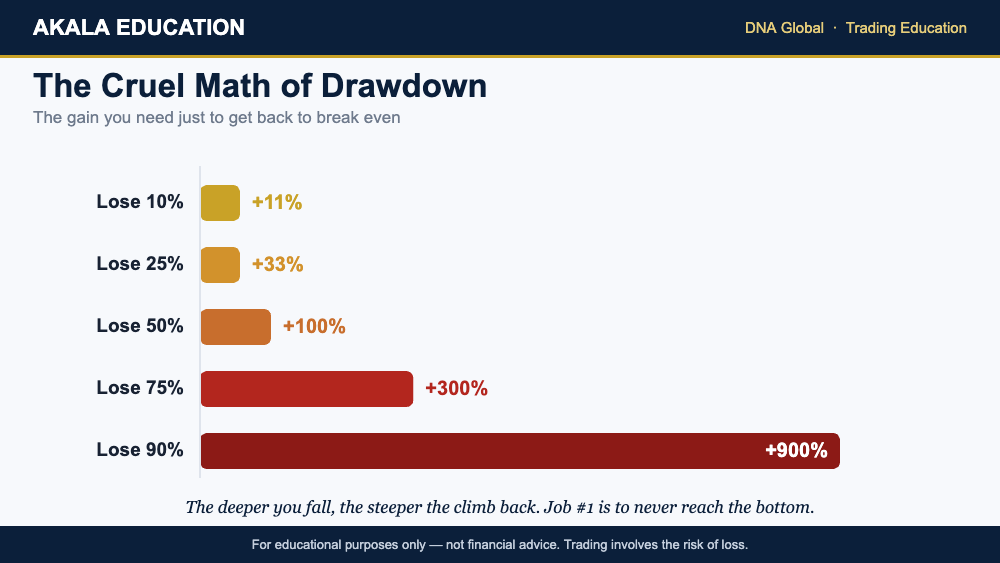
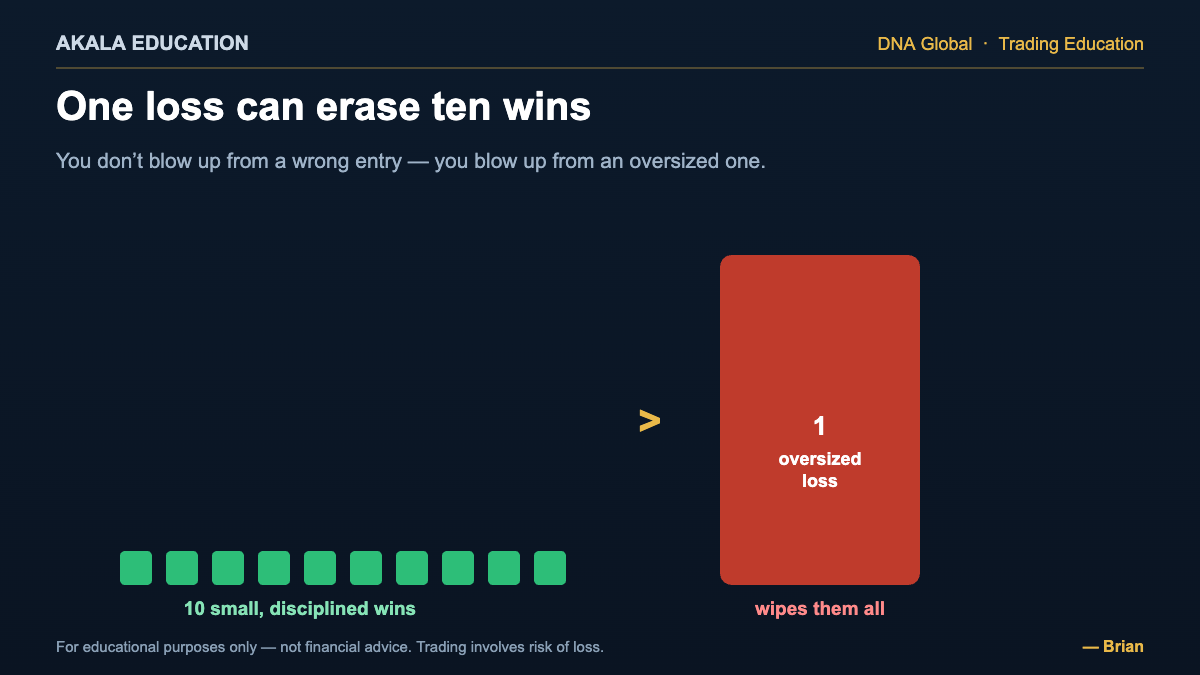
That was the moment I swallowed a bitter truth: you can be right seven times and still burn, if the three wrong calls are bigger than all seven right ones combined. I’d been adoring that long “win” column for years. But the market doesn’t score by count. It pays by SIZE.
I thought of my morning runs. Nobody finishes a marathon on one beautiful sprint at the third kilometer; you finish on the sum of forty-two. An account is the same. It doesn’t live on one heroic winning trade — it lives, or dies, by the sum. So I crossed out the old win-loss sheet, crumpled it, and started counting again: size, not count.
The Real Measure: Expectancy, Not Win Rate
Once I counted size, I understood why two people who take the same trade walk into two different fates. I once sat beside two traders on the same entry — same pair, same morning. A hundred trades later, one still had an account; the other did not. And the one who survived was the one who was wrong more often.
Let me walk you through it — and please read these numbers as a hypothetical, an illustration of the mechanism, not anyone’s real results. The first trader won 7 out of 10, the kind of number you’d post on Facebook. But every win pocketed +1 and every loss gave back -3: seven rights make +7, three wrongs take -9, total negative. He was right more often — and he got poorer.
The second trader won only 4 out of 10, more wrong than right. But every win let the profit run +3 and every loss was cut clean at -1: four rights make +12, six wrongs take -6, total positive. He was wrong more often — and he lived.
(Those numbers are a hypothetical illustration of the mechanism — not anyone’s actual outcome, and not a promise of any result.)
Same entry. Two fates. Because win rate never tells the whole story. What decides whether you live or die isn’t your win rate — it’s expectancy, the crossing of two things: how often you’re right, and how big each right call is compared to each wrong one. That crossing is your risk reward ratio, your R:R. Strip out the risk to reward and win rate is just a medal on the wall, not a dollar you can spend.
The question is not how many times you can be right. It’s whether the total your right calls bring home is larger than the total your wrong calls carry away, over time. That is the whole of trading math, and most people never do the arithmetic — the market doesn’t pay for how many times you were right; it pays for the size of your right minus the size of your wrong.
Why You Hold Losers and Cut Winners — I Did Too
But if the formula is that simple — cut losses, let winners run — why can almost nobody do it? Why did I, knowing it perfectly well, do the opposite for years? Because I didn’t lose from bad analysis. I lost from good analysis — and then let fear hold the mouse for me.
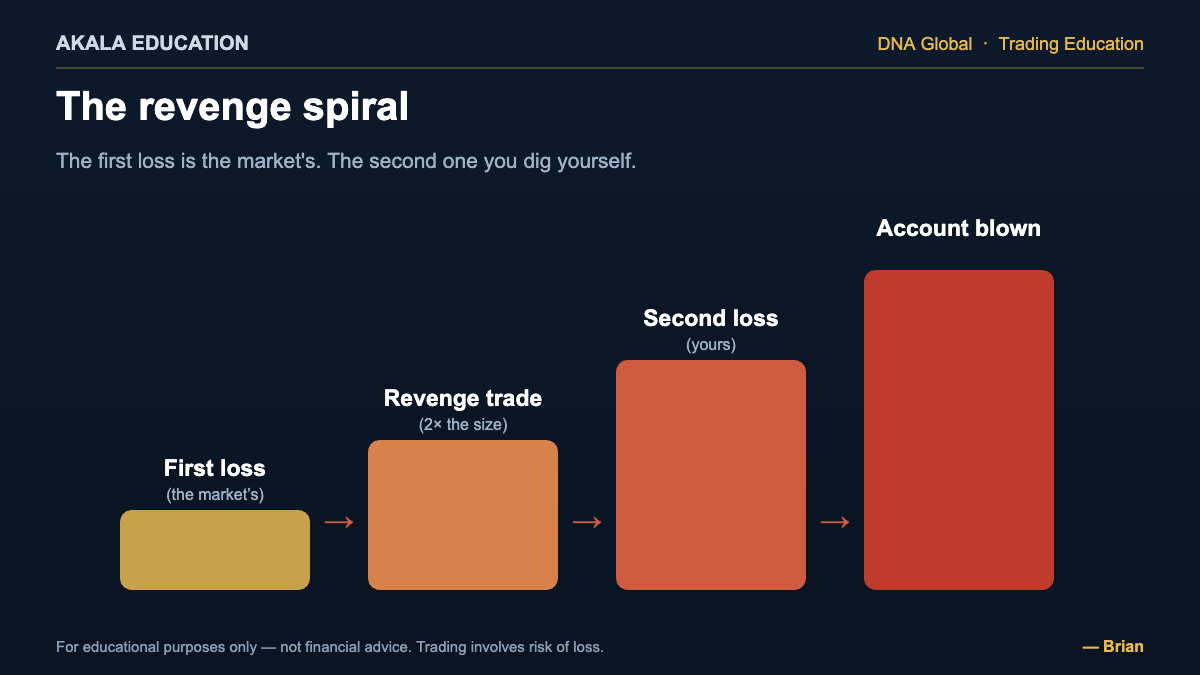
This scene I’ve lived until I knew it by heart. The trade is green; a voice whispers, “Close it, before it’s gone.” I close. +1. Relief. Half an hour later the price runs five times as far — and that stretch was supposed to be mine. Then the losing trade slices through the point where I’d meant to stop, and the voice changes its tune: “Hold on, it’ll turn around any second.” I drag the stop down, then drag it again, nursing the loss the way you nurse a hope. -3.
Same person, two opposite reflexes. With profit, I’m so afraid to lose it that I cut it short; with loss, so afraid to be wrong that I hold it tight. I flipped the law of survival with my own hands — turning “big wins, small losses” into “small wins, big losses.” The win rate stayed beautiful; the account quietly bled. This isn’t a flaw in the head. It’s a flaw in the trembling hand — a failure to manage yourself.
I learned to swim late, so I feel this in my body. When you’re drowning, instinct screams at you to flail — and the more you flail, the more you sink. The survivor holds form at the exact moment the body demands the opposite. Holding a loser is that flail. Cutting a winner short is the same: instinct grabbing for the joy before it can dissolve.
You don’t lose because you read the market wrong. You lose because you read your own emotion right — and then obediently do what it says.
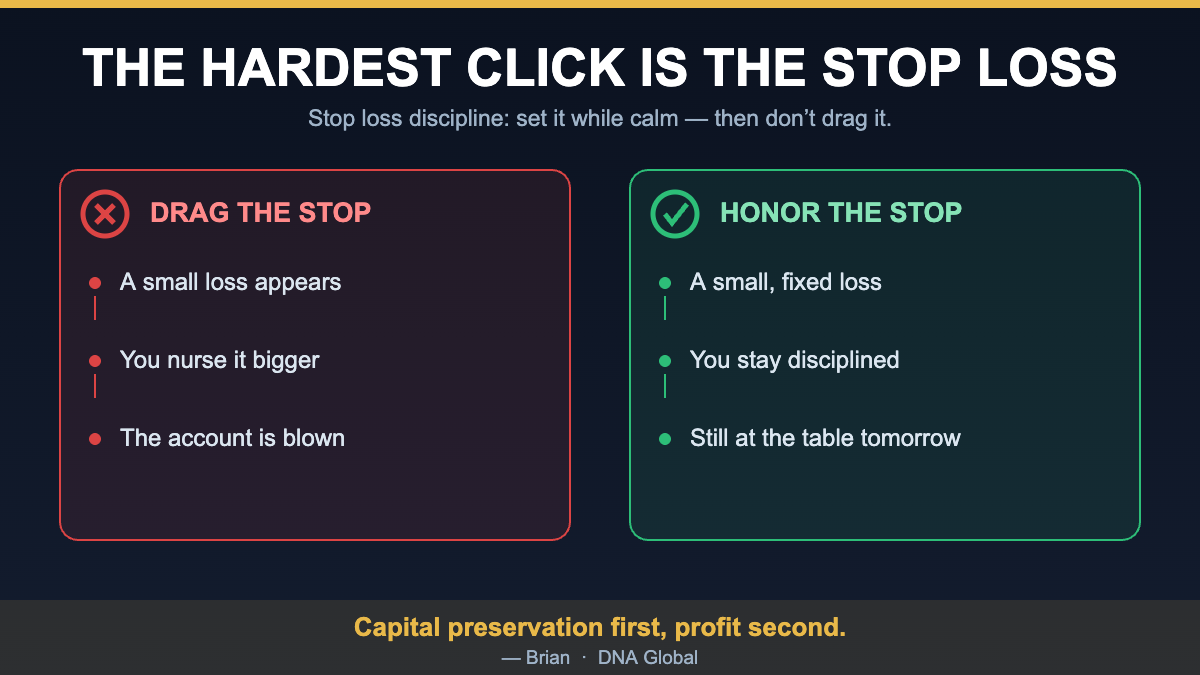
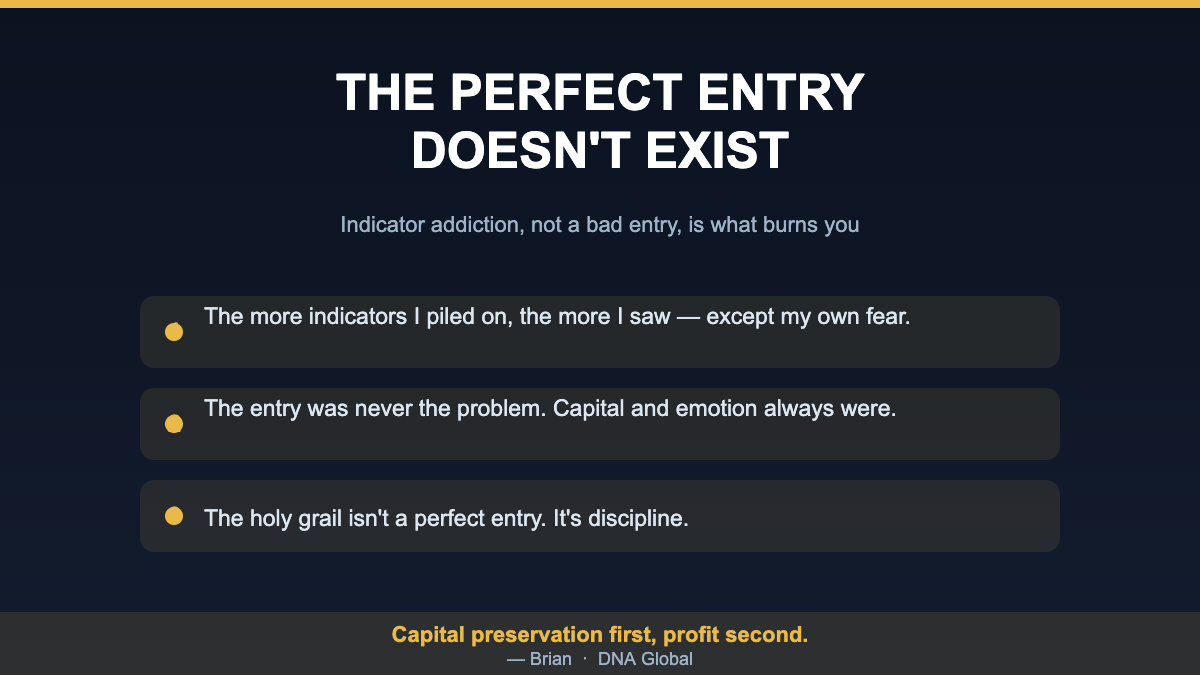
The entry was never the problem. React, don’t predict. Capital preservation first, profit second. The thing that needs managing isn’t on the chart — it’s between your two ears. If the close button is what scares you, you might recognize yourself in The Hardest Click Is the Stop Loss.
From Victim of the Number to Owner of the Ruler
Once I understood the enemy lived inside me, I stopped hunting for it out there. After that 2 a.m. night, I quit chasing the “magic entry” — the pattern or indicator I’d believed would let me guess the market right. The harder truth: I was standing in victim mode — blame the market for cheating, blame the news that broke right after I entered, blame the wave that “refused” to go my way.
The owner doesn’t say “blame.” The owner asks: what is in my hands that I haven’t taken control of yet? The answer wasn’t in the market. It was in the ruler I used to measure myself.
So I stopped being a “signal star” and got to work on something far less glamorous: a loss-cutting rule written before I clicked, not while my heart was pounding; a minimum R:R on every trade, no entry below the bar no matter how my hands itched; and a journal, so each week I could look straight at my real expectancy instead of letting that vain little number stroke my ego. Cutting losses to let winners run isn’t a tactic you learn once; it’s a thing you re-earn one trade at a time.
There’s a blunt truth in it: a pretty number feeds your ego; a good system feeds your account. I chose to feed the account. I’m not selling you a get-rich-quick dream — I paid tuition steep enough to know there’s no magic index. The market doesn’t reward whoever guesses right most often; it rewards whoever keeps the right bigger than the wrong, steadily, across the years. That isn’t luck; it’s a system with positive expectancy, repeated long enough.
You are not a victim of the number. You are the one holding the ruler.
Tonight, Reopen Your Last 10 Trades
I won’t end with a blessing. I’ll end with one thing you can do before you turn off the light tonight. Pull up your last 10 trades. Stop looking at which won and which lost — you’ve counted that enough. Beside each, write a different number: the real money you made or lost. Then add it all up. That total — not your win rate — is the truth about you.
Maybe it’s positive. Good for you. Maybe it’s negative even though you won 7 out of 10 — if so, don’t rush to feel bad. You just dared to look straight at the thing I avoided for years. Win rate tells half the story; the other half lives in that total, and that’s the half that pays you.
What I want you to carry: You don’t need to be right more often. You need a system that makes your right worth more than your wrong.
Because in the end, your win rate is still lying to you — as long as you let it count times instead of measuring size. Re-measuring your own ledger sounds simple, but alone in the dark it’s very easy to give up. Alone you go fast; with a team you go far — and I choose far. At DNA Global there are people re-measuring their ledgers every day, and an empty seat beside them, kept for you.
Trading always carries the risk of losing capital; nothing here is a buy/sell recommendation or a promise of profit — only the story and the lessons I’ve lived through.
— Brian
FAQ
What is a good win rate?
There’s no golden number. A trader who wins 40% of the time can do just fine if each win is three times the size of each loss. A trader who wins 70% can still blow up if losses are big and wins are small. Win rate on its own is a pretty but hollow figure — it only means something standing next to your risk reward ratio.
Does a high win rate guarantee profit?
No — and this is the sweetest trap. You can be right seven times out of ten and still be negative if the three wrong calls swallow all seven right ones. A high win rate gives you the feeling that you’re good. Your equity curve tells you who you actually are.
How are risk reward ratio and expectancy different from win rate?
Win rate: how many times you’re right. Risk to reward: whether each win is bigger or smaller than each loss. Expectancy multiplies the two together — and answers the only question worth asking: across a hundred trades, do you still have capital or an empty wallet. Win rate measures your ego. Expectancy measures your lifespan. That multiplication is the core of trading math.
How do I build positive expectancy?
Cut losses clean. Let winners run. And the hardest part, the one no one can do for you: don’t hold losers out of regret, and don’t close winners out of fear. That isn’t a trick — it’s discipline, paid for one trade at a time.
All numbers above are illustrative examples, not recommendations.
About the author. I’m Brian — founder of DNA Global, a training community for Forex/XAUUSD traders. I once believed the right entry was the thing that changes your life, and I was once proud of a high win rate while my account stayed negative. I paid the tuition for that lesson, then chose to build a system with discipline instead of playing the signal star. Now I write down what I’ve lived through, so you don’t have to pay the same price.
This article is educational and reflects personal experience. It is not financial advice. Trading carries the risk of loss; consider your own circumstances before making any decision.
— Brian